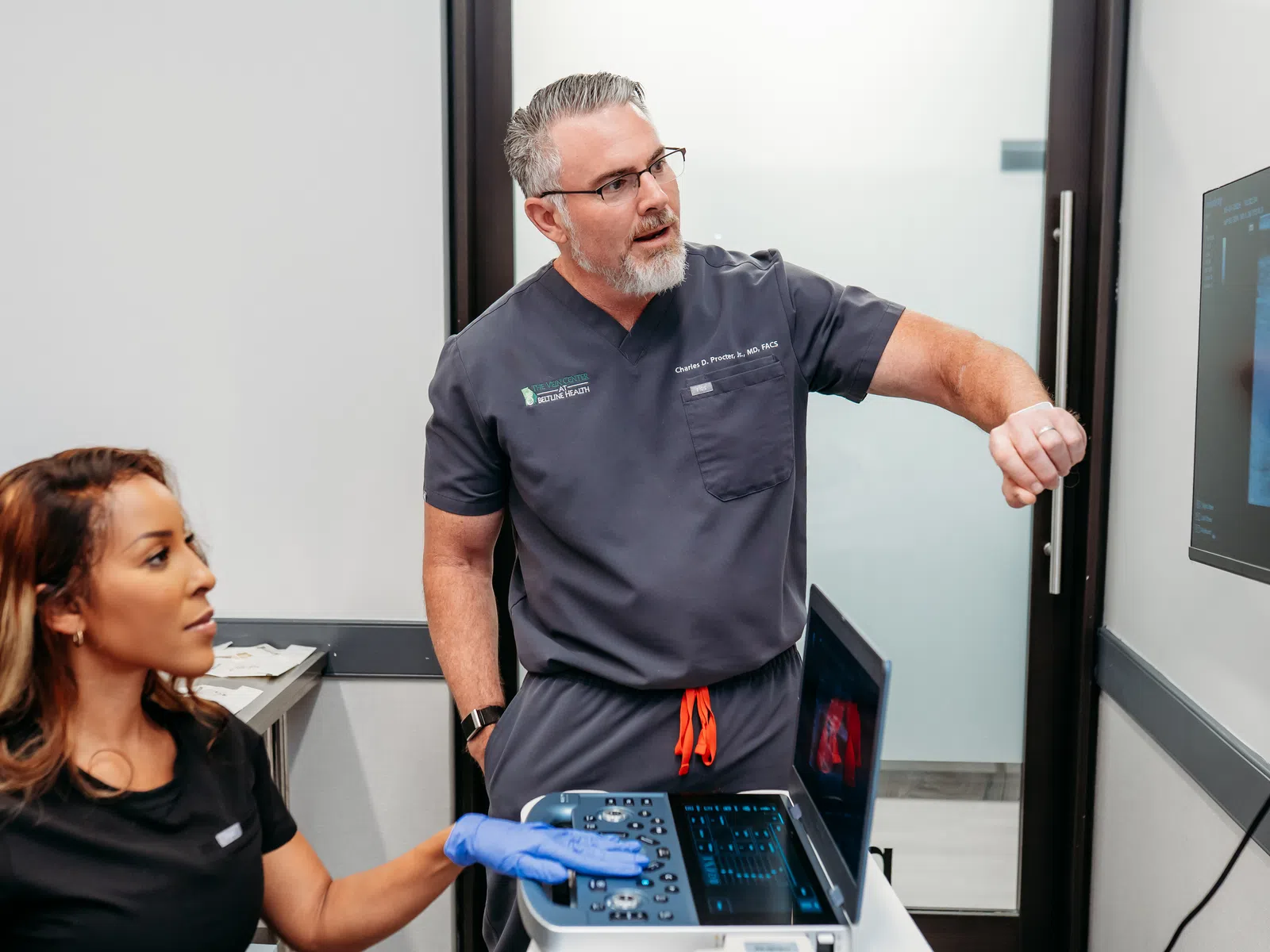
Doctor explains ultrasound results to patient using medical imaging equipment in clinic room

Robotic Weight Loss Surgery

Precision driven procedures using advanced robotics to enhance outcomes and speed up recovery.

Robotic weight loss surgery is a minimally-invasive surgery option for bariatric patients. This surgery method allows surgeons a greater range of motion and to perform surgeons through smaller incisions. Overall, this surgery method leads to quicker recovery time for patients and less cosmetic scarring.

WHY PATIENTS TRUST BELTLINE HEALTH

White check mark icon on a teal circular background representing confirmation or approval.

Comprehensive Care

From diagnosis to treatment, we handle everything in-house for a seamless experience.
White checkmark symbol inside a teal circular button representing confirmation or success.

Minimally Invasive Technology

Advanced treatments mean less pain, faster recovery, and lasting results.
White checkmark icon inside a teal circular background symbolizing confirmation or approval.

Expert Team

Our board-certified specialists provide compassionate, personalized care.

White check mark symbol inside a teal circular background indicating completion or approval

Fast Recovery

Most procedures take under an hour, and you can resume daily activities the same day or the next.


SCHEDULE  CONSULTATION 

Doctor in white coat consulting with female patient in bright medical office with large windows.
Person using a laptop with both hands typing on the keyboard in a bright indoor space.
Female doctor with laptop smiling and consulting a patient in a modern medical office with orchid plant.
Female patient discussing health concerns with doctor in bright medical office with large windows.

How Does Robotic Surgery Work?

Surgeons work from a computer console at the patient's bedside. This computer console allows them to better control the small medical instruments that will be used during the weight loss surgery operation. These instruments are mounted on three robot arms. A fourth robotic arm has a 3D camera that helps amplify the surgery site for doctors. During the surgery, the doctor is in complete control of all the instruments used and performs the surgery as normal. The robotic instruments simply allow for greater motion and the doctor to be more precise.

Misconceptions About Robotic Weight Loss Surgery

People often believe that robotic surgery is conducted solely by a robot. This is not the case. In fact, surgeons are controlling the robot themselves. The robotics only allows surgeons a greater range of motion than performing surgeon with traditional methods. Furthermore, the instruments surgeons use are smaller in robotic surgery allowing for the surgery to be minimally invasive.

Benefits of Robotic Surgery

A surgeon may opt for robotic surgery to increase visualization, enhance dexterity and provide greater precision. As mentioned, some da Vinci surgery systems provide surgeons with a 3D view. This gives them more information and more control during the operation. Also, robotics allows for a greater range of motion in surgeons helping them achieve difficult movement during surgery with ease. Robotic weight loss surgery achieves greater precision among surgeons because they have a wider range of motion and a bigger field of vision thanks to the robotic tools.

Benefits of Robotic Surgery For Patients

Ideally, surgeons use smaller incisions to decrease the chance of infection and allow patients to return to their daily lives. Robotic surgery has been effective and shortened hospital stays in bariatric patients. Minimally invasive surgeries also reduce pain and discomfort in patients due to the smaller incision site. During surgery, there are also fewer blood transfusions because of reduced blood loss. Finally, patients are happy with the other cosmetic appearance of smaller incision scars. Since incision sites are so small there is minimal scarring in bariatric patients.

FAQs - Frequently Asked Questions

What is robotic weight loss surgery?

Robotic weight loss surgery is a minimally invasive bariatric procedure where surgeons use robotic systems to perform operations through smaller incisions, enhancing precision and reducing recovery time.

How does robotic weight loss surgery work?

Surgeons operate from a computer console at the patient's bedside, controlling small instruments mounted on robotic arms and a 3D camera, allowing for greater precision and range of motion during the procedure.

What are the benefits of robotic weight loss surgery for patients?

Benefits include smaller incisions leading to less scarring, reduced pain and discomfort, shorter hospital stays, and quicker recovery times compared to traditional surgical methods.

Is the surgeon in control during robotic weight loss surgery?

Yes, the surgeon is in complete control of the robotic instruments throughout the procedure; the technology enhances their capabilities but does not operate independently.