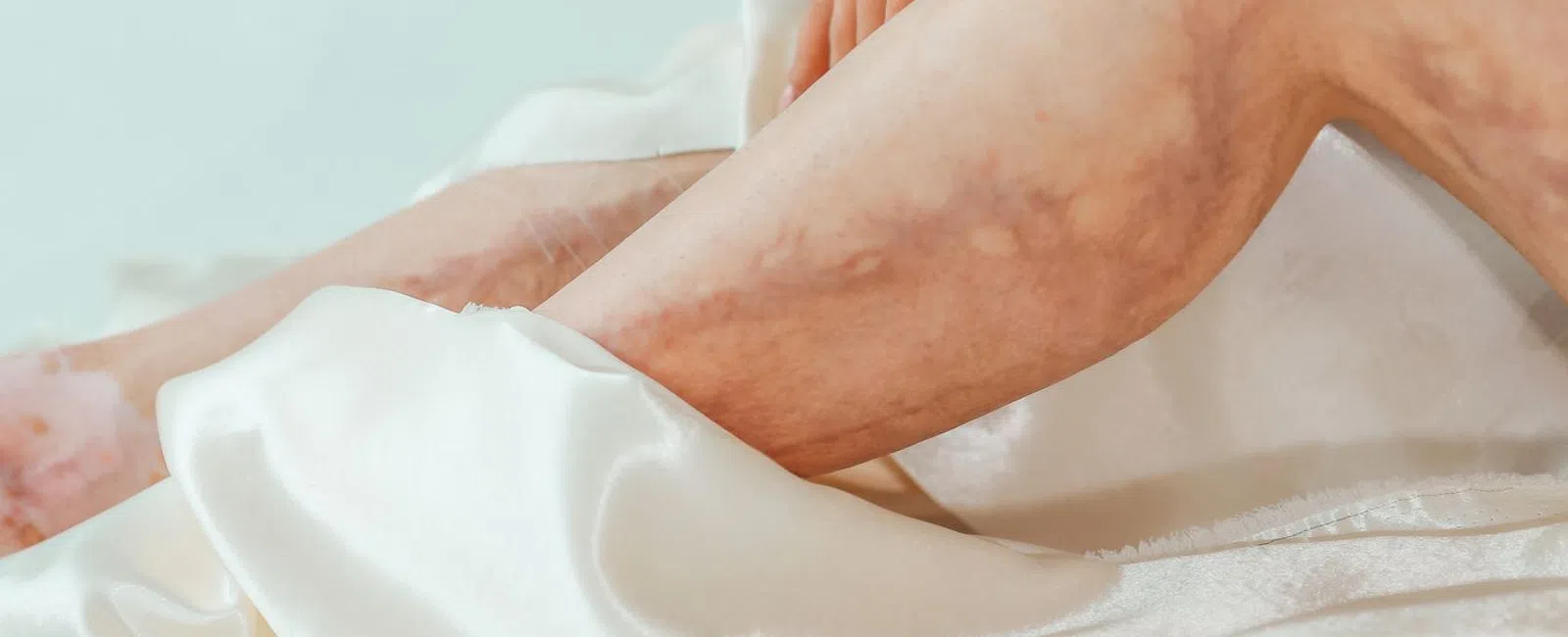
Vanessa's been wearing the compression socks. She elevates her legs most nights. She switched out her heels for something with actual support two years ago, back when her legs first started aching after a full day on her feet at the school in Newnan. For a while, that was enough.
Lately it hasn't been.
The ache shows up earlier in the day now. And there's a small web of reddish-purple lines spreading just above her ankle that wasn't there last spring. She's been telling herself it's probably nothing — just more of the same, just aging, just legs. But "just more of the same" and "actually getting worse" can look identical from the inside, especially when you've been managing it quietly for years.
If the habits that used to help your varicose veins are helping less than they used to, that's usually not you slipping on compression socks or exercise — it's the vein disease itself progressing. Spreading spider veins, new skin discoloration, or aching that doesn't fully ease overnight are signs worth having evaluated, not signs to push through.
Why Lifestyle Tips Have a Ceiling
Compression stockings, movement breaks, leg elevation — they all work the same way. They reduce the pressure inside the vein so blood doesn't pool as much. That's genuinely useful, and it's why we recommend all of it.
Here's the part that doesn't get said enough: none of it repairs the valve.
Varicose veins happen because a tiny one-way valve inside the vein wall stops closing properly. Blood that's supposed to move up toward your heart falls backward and pools instead. Every lifestyle change you make is working around that broken valve, not fixing it. It's the difference between propping up a door that won't latch and actually repairing the hinge.
That's not a criticism of the compression socks — they're doing real work. It's just important to know what they can and can't do, because if you expect them to stop the disease itself, "it's not working like it used to" starts to feel confusing instead of like the useful information it actually is.
The Signs That Mean It's Progressing
Spreading Spider Veins Aren't Always "Just Cosmetic"
A few spider veins by themselves are common and usually harmless — plenty of people have them for years with no other issues. But when they start spreading, especially clustered near the ankle or growing out from a varicose vein you already have, they can be one of the more visible early markers of chronic venous insufficiency (CVI) — the same valve failure driving the varicose vein underneath.
The short version? Spider veins aren't the disease. They're sometimes the smoke that tells you where the fire is.
The Ache Starts Coming Back Faster
Early on, most patients get relief from elevating their legs for twenty minutes or sleeping with a pillow under their calves. As venous insufficiency progresses, that relief gets shorter. Some patients notice the ache is back within an hour of standing up again — or that it's there again the next morning before they've even been on their feet.
Skin Changes Near the Ankle
Look here first, honestly, because it's the sign patients tend to miss the longest: brownish or reddish discoloration around the ankle, skin that feels thicker or leathery, or patches that itch without an obvious cause. This is called venous stasis dermatitis, and it happens when years of pooled blood and pressure start affecting the skin itself. It's also one of the clearer signals that this has moved past "cosmetic."
Nighttime Cramping or Restless Legs
If your legs are cramping at night more than they used to, or you're dealing with a restless, can't-get-comfortable feeling after a long shift, that's often related to the same circulation problem — not a separate issue.
A Vein Becomes Hot, Red, Hard, or Suddenly Painful
This one isn't a "watch and wait" sign. A hot, tender, cord-like vein can indicate superficial thrombophlebitis — inflammation or a clot in the vein — and it should be evaluated promptly, not managed at home.
Who We See This In Most
We see this progression a lot in patients whose jobs put them on their feet, or in one position, for hours at a stretch. Double shifts at Piedmont Hospital. Ten hours standing on the concrete floor at the Porsche plant. Teachers like Vanessa, moving between a classroom and hallway duty all day with maybe one real sit-down break. None of that is a coincidence — prolonged standing or sitting is one of the biggest drivers of the pressure that damages vein valves in the first place.
If that's your work life, the lifestyle tips matter more, not less. But it also means the ceiling on what they can do arrives faster than it might for someone with a desk job and a flexible schedule.
What Actually Treats the Vein (Not Just the Symptoms)
| Lifestyle Management | Minimally Invasive Treatment | |
|---|---|---|
| What it addresses | Symptoms and pressure | The damaged valve/vein itself |
| Can it repair the valve? | No | Effectively closes the faulty vein and reroutes blood flow |
| Downtime | None | Typically same-day, back to normal activity quickly |
| Best for | Early-stage, mild symptoms | Progressing symptoms, visible spread, skin changes |
| Example options | Compression stockings, exercise, elevation | Radiofrequency ablation, sclerotherapy |
Here's what's actually happening in a treatment like radiofrequency ablation: we use a tiny bit of heat, delivered through a thin catheter, to seal the problem vein shut from the inside. The body doesn't miss it — it simply reroutes blood flow to the healthy veins nearby that were doing fine all along. No stripping, no general anesthesia, no real downtime. For smaller veins, sclerotherapy does something similar with an injected solution instead of heat.
We know compression socks are a pain to get on in Georgia humidity, and we know most patients try to power through for a while before coming in — that's normal. But once the signs above start showing up, treatment addresses the actual cause instead of asking you to manage around it indefinitely.
Modern vein treatment can't reverse or cure the underlying vein disease — no treatment can undo the valve damage that's already happened. What it does is close off the affected vein so it stops causing problems, which is why most patients see real, lasting relief from symptoms even though the disease itself isn't "cured."
When to Actually Come In
Schedule a vein screening at Beltline Health →
A vein screening is quick, and it answers the question lifestyle changes alone can't: whether what you're seeing is manageable as-is, or whether it's time to address the vein directly. Check whether your insurance covers varicose vein treatment — for symptomatic vein disease, it often does.
Frequently Asked Questions
How do you stop varicose veins from getting worse?
Compression stockings, staying active, elevating your legs, and avoiding long stretches of sitting or standing can slow the progression of varicose veins. But lifestyle changes manage symptoms — they don't fix the underlying faulty valve causing the vein to bulge. If symptoms keep progressing despite consistent lifestyle changes, that's a sign the vein itself needs treatment, not just management.
Are spider veins a bad sign?
On their own, spider veins are usually harmless and cosmetic. But when they show up alongside leg heaviness, ankle swelling, skin discoloration, or aching that worsens by the end of the day, they can be an early visible sign of chronic venous insufficiency — the same underlying valve problem that causes varicose veins. A vein screening can tell the difference.
Can varicose veins be reversed without treatment?
No. Once a vein valve is damaged, lifestyle changes can't repair it — they can only reduce the pressure that makes symptoms worse. Modern minimally invasive treatments like radiofrequency ablation and sclerotherapy close off the damaged vein and reroute blood flow to healthy veins nearby, which is the only way to address the vein itself rather than just its symptoms.
When should I see a doctor about varicose veins?
See a vein specialist if your legs feel heavy or achy by the end of most days, if compression socks and elevation stop helping as much as they used to, if you notice new spider veins spreading, or if you see skin discoloration near your ankles. Get seen right away if a vein becomes hot, red, or suddenly painful, or if it starts bleeding.
According to the Cleveland Clinic, severe varicose veins left untreated can lead to venous ulcers — sores on the skin caused by long-term pressure and pooled blood. A 2018 overview of systematic reviews published in the São Paulo Medical Journal found minimally invasive treatments — foam sclerotherapy, laser, and radiofrequency ablation — comparable to conventional surgery in both effectiveness and safety, while also noting real-world adherence to compression stockings alone runs around 37%, which is part of why lifestyle management has a ceiling for many patients.
Medically Reviewed By: Charles Procter, Jr., MD, FACS